What If the Greatest Blessing in Hardship Isn’t Relief, But Revelation?
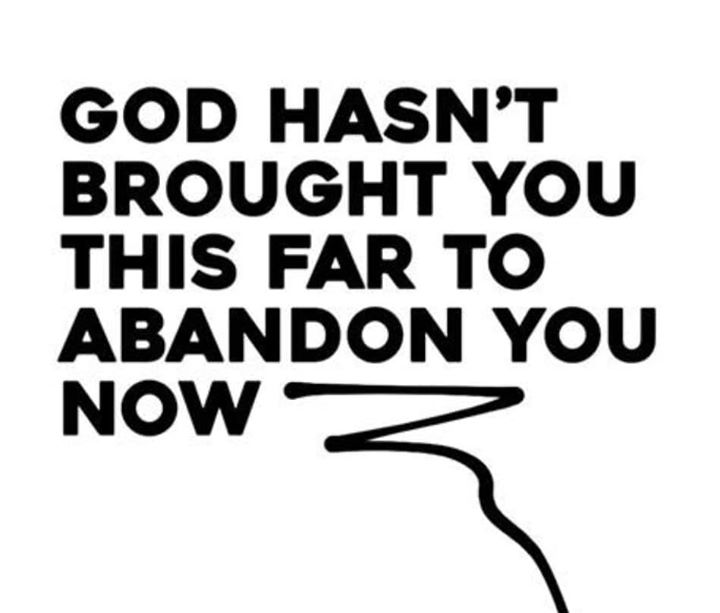
Have you ever found yourself in a season of deep despair? Perhaps you are there now. Where sorrow seems ceaseless and you feel as if you are learning the true meaning of “longsuffering.”
Often, when people are entrenched in hardships, the Book of Job is inevitably brought up. As someone who has spent the better part of twenty years walking through one unwelcome trial after another, I can confidently attest that while many want to reference Job as the biblical character synonymous with suffering, few have actually read the full account. In our current generation, Job has become more of a cultural reference than a sage testimony of the deity, wisdom, and provision of God extended to those immersed in tragedy.

It is hard to read the Book of Job – I get it, I really do. Some of the dialogue can feel a bit archaic, even mystical. But the reality is, we avoid this book of the Bible because we don’t want to intimately witness that level of misery. As humans, we have an innate desire to avoid pain at all costs, even if the sufferer is someone other than ourselves. It makes us uncomfortable. We desire life, not death, joy rather than sorrow, and if we aren’t forced to face such circumstances, who would voluntarily look to enter into them?
While undesirable to our humanity, it is abundantly clear throughout the Bible that God employs hardships to fortify our faith and draw us closer to Him. Joseph did not inherit his prophesied role until after he endured over a decade of slavery and imprisonment, the claim to the Promised Land was only achieved on the other side of the battle, and freedom from sin and death was only accomplished by our Lord, Jesus Christ, on the other side of the cross. Despite the clear pattern, we think our lives should be filled with peace, prosperity, and happiness. Job struggled with similar sentiments.

After losing his property, his livelihood, and all of his children, Job sat in a heap of ashes, scraping pus off sores covering his whole body, and crying out to God that he wished he had never been born. Though he was known as a man of faith, Job struggled to comprehend God’s good plan in any of this. And rightfully so… How many of us would have responded any differently? Pride and a desire for justice rose up in Job, and he even challenged God to defend His actions. Job’s declarations may seem bold (who is he to demand the God of the universe justify His actions), but when unimaginable tragedies ravage our lives and hearts, there is little we can do but wail, lament and look for something… anything to blame for our heartache.
Thankfully, God doesn’t turn away from us (or Job) when our pain screams louder than our logic. As a Good Father, God patiently allows Job to vent until there is nothing left to say. When Job finally stops talking, a full 38 chapters later, God does something completely unexpected. He reveals His majesty, omnipotence, and power to Job. When face-to-face with such glory, there is nothing left to refute. Job bows in humility; his entire outlook and heart forever changed.
“Then Job replied to the LORD: ‘I know that you can do all things; no purpose of yours can be thwarted. You asked, ‘Who is this that obscures my plans without knowledge?’ Surely I spoke of things I did not understand, things too wonderful for me to know. You said, ‘Listen now, and I will speak; I will question you, and you shall answer me.’ My ears had heard of you but now my eyes have seen you. Therefore I despise myself and repent in dust and ashes.” – Job 42:1-6 (NIV).

The story jumps ahead with an epilogue describing how the latter part of Job’s life was greater than the former. Many think this was Job’s reward for remaining true to the Lord in the midst of such misfortune. While those are all wonderful gifts bestowed upon Job, that was not the greatest blessing. The greatest blessing was the unveiling. Like Saul, as he is transformed into the Apostle Paul, the scales came off of Job’s eyes, and he was able to SEE God. Fully see Him, and know Him in a way that would not have been possible without enduring the unendurable.
If you find yourself in your own season of Job, may I encourage you to hold on. There is another side to the trial you are facing. And though it may not feel like it all at this moment, God IS working for your good and not your harm. May you like Job, be able to boldly declare, “My ears had heard of you but now my eyes have seen you,” Job 42:5 (NIV).
Intersecting Faith & Life:
Are you struggling through unwelcome hardships? Are you besieged by doubts, maybe even desperation? If so, take a fresh look at the Book of Job and the additional scriptures provided today. I pray God opens your eyes to the true gift of suffering – the gift of Him.
Further Reading:
Rom. 5:3-5
Jer. 29:11
Hardships often feel like seasons to escape, but what if they’re sacred spaces where God reveals Himself more deeply than ever before? Are you only praying for the pain to end, or are you asking God to meet you in the middle of it? What might He be trying to show you right now? Instead of trying to escape it, why not ask God to reveal Himself and meet you in the middle of it?
What if the very place you’re trying to run from is the ground where your faith is meant to grow roots? Sometimes, God doesn’t remove the storm because He wants to anchor you in the middle of it—to teach you trust that goes beyond comfort, and peace that defies understanding. In those moments when everything feels uncertain, His presence can become more real than ever before. So rather than waiting for the hardship to pass, lean in. Let it be a holy place, a turning point where your heart is shaped and your view of God is deepened.

Pain has a way of stripping away the distractions, leaving us face to face with what truly matters. In those raw, quiet moments, God often speaks the loudest—not always with answers, but with His presence. What if the very ache you feel is an invitation to intimacy, a call to depend on Him in ways you never have before? Don’t rush past the discomfort. Sit with it. Bring it to God. He’s not distant from your suffering—He’s in it with you, shaping, refining, and drawing you closer to His heart.
So maybe the hardship isn’t just something to endure, but something God is using to draw you into deeper trust, deeper faith, and a deeper awareness of His love. What if the breaking is actually the beginning of something beautiful? God is not wasting your pain. He is present in it, working through it, and walking with you every step of the way. You don’t have to have all the answers—you just need to keep turning your heart toward Him.
Let’s pray:
God, meet me in the middle of this. Help me to see You, trust You, and lean into Your presence even when it’s hard. Use this season to draw me closer to You. Amen.
Even in the darkest valleys, God is still writing your story—and His story always ends in redemption. Keep going. You’re not alone.
M. J. Conner